


Scroll down
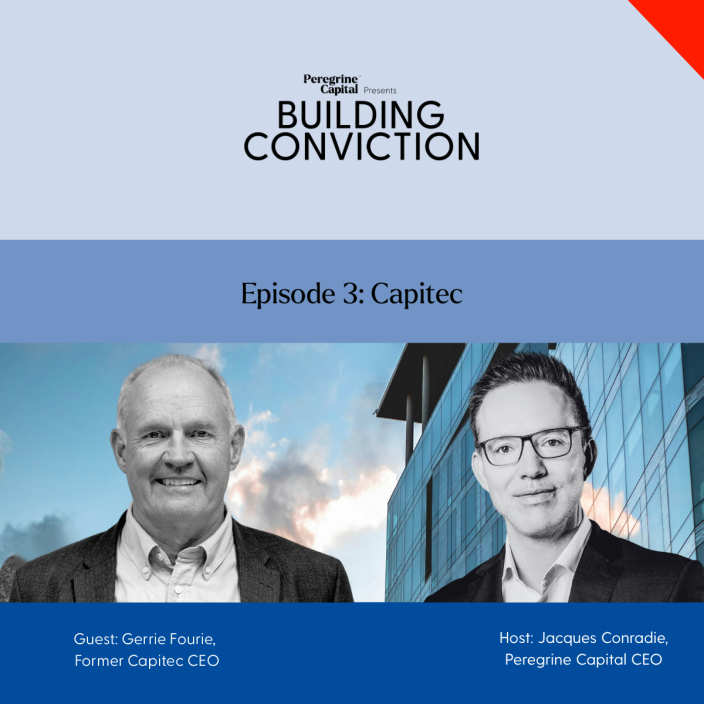
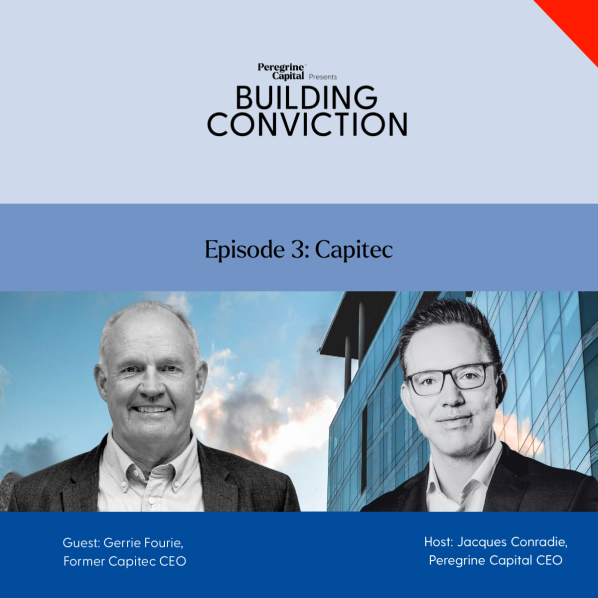
Episode 3
Gerrie Fourie, Capitec
“We’re retailers, we think client and then risk. Bankers look at risk, risk, risk, and then client.” Twenty-five years building Capitec into South Africa’s largest bank by market capitalisation, the one capital rule he would not move, and what the market misread for twelve years.
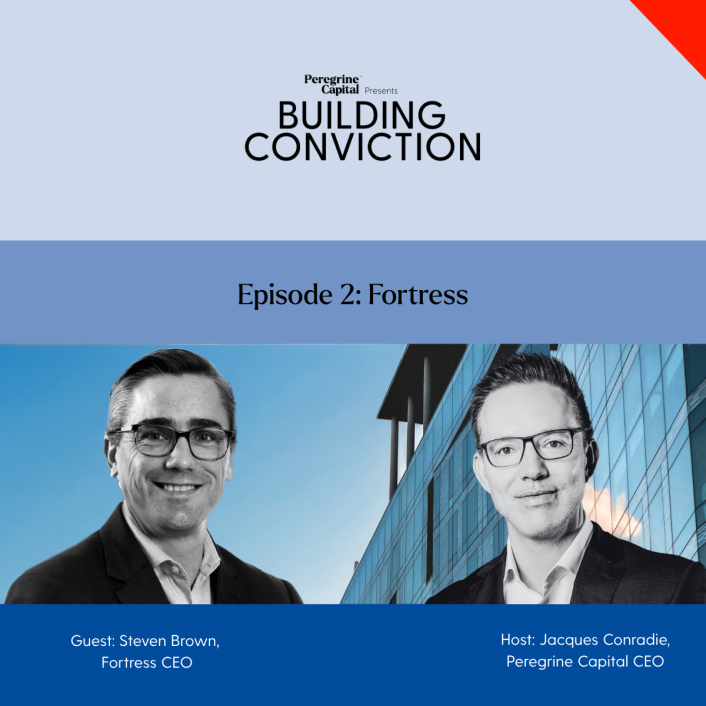
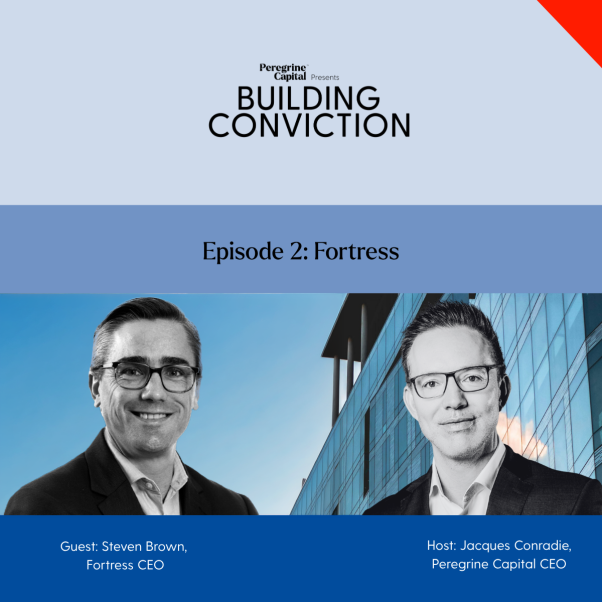
Episode 2
Steven Brown, Fortress
Steven Brown, CEO of Fortress Real Estate, explains how a flawed dual-share structure, capped A shares and geared B shares with equal voting rights, nearly broke the company, the R7 billion NEPI Rockcastle deal that finally fixed it, and the growth strategy that has followed across logistics, retail and Central Europe to help build a R54 billion property portfolio.
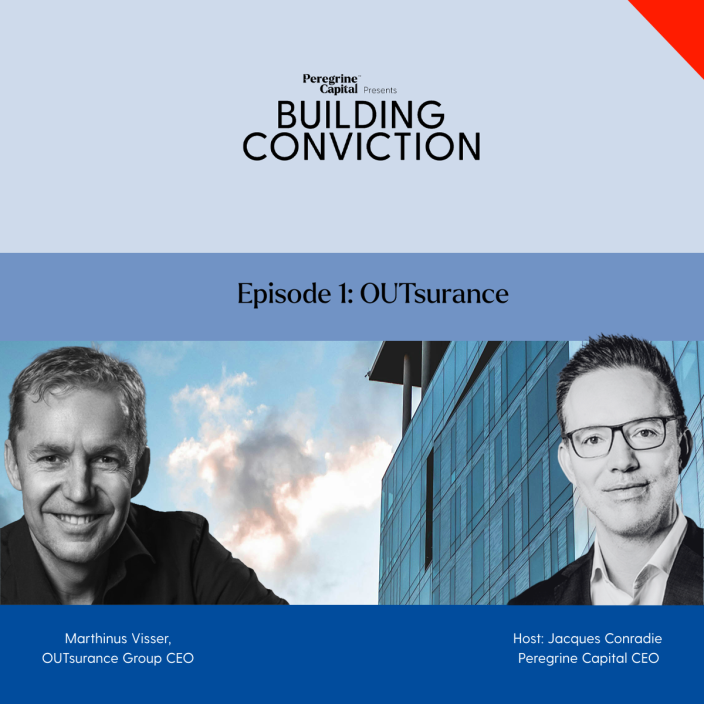
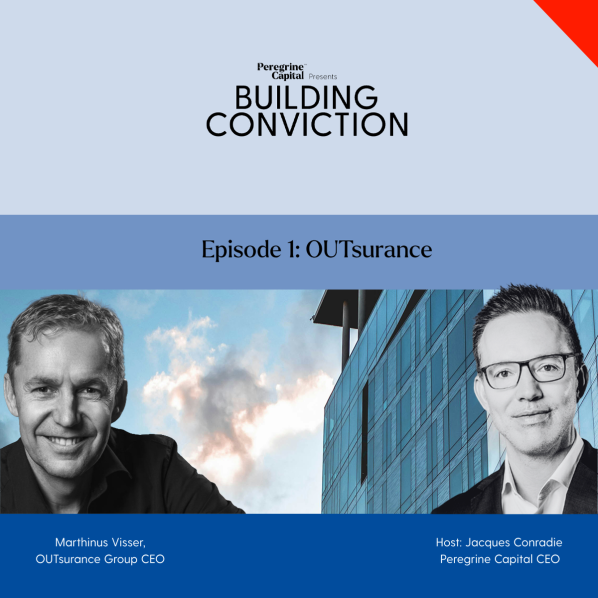
Episode 1
Marthinus Visser, OUTsurance
Twenty-eight years inside one of the JSE’s most closely watched compounders, from a single Centurion office in 1998 to a multinational insurer worth more than R100 billion. Where the OUTbonus came from, why Australia and not Brazil, and why they walked away from the ventures that did not work.
Building Conviction:
Our Podcast On The Leaders Behind Exceptional Businesses
In August we launched Building Conviction, a podcast series about what it takes to build something exceptional – the businesses, the leaders and the decisions behind them. Jacques sits down with the people who actually built the companies we follow closely, and every guest closes with a Conviction Card: one high-conviction view for the decade ahead. Three episodes are out.
Meet Our Newest Team Member
We are delighted to welcome Brian “Boris” Kourie to the Investment Specialist team. Boris joined in June and is based in Plettenberg Bay, looking after the Garden Route. We are excited to see the impact his skills and experience will bring.
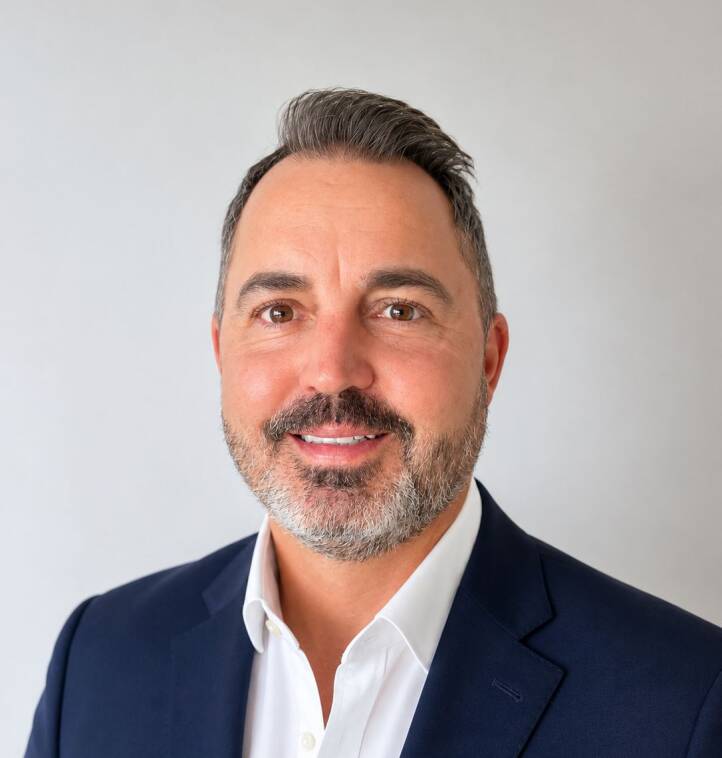
Boris Kourie
INVESTMENT SPECIALIST
Meet Our Finalists








Click through to see all regional finalists.
Can you make 24? For hundreds of primary school learners across South Africa, it has become a test of speed, strategy and mental agility. What started as a 54-school pilot in Gauteng in 2025 has grown into a national competition involving more than 300 schools. On 29 October, 38 Grade 4 to 6 finalists compete for the title – the winner takes R25,000 in a Peregrine Capital investment account, plus R25,000 for their school.
Jacques Conradie, as it happens, was a Maths24 national champion himself at school.
Energised by Peregrine Capital:
Can You Make 24?
24SumMore

Scroll down
CEO, Jacques Conradie
Welcome to the latest edition of Peregrine Capital’s newsletter, where we share our views and news about our business, our funds, and why hedge funds should form part of a growing and diversified investment portfolio. This edition covers our perspective on the third quarter of 2026, following the semi-annual investor letter we published in July.
The third quarter was a reminder of how quickly the investment backdrop can change. The ceasefire in the Middle East broke down, the oil price rose above $100 a barrel, and both the US Federal Reserve and the South African Reserve Bank raised interest rates. It is in markets like these that an active, valuation-disciplined approach earns its place in a portfolio. In his review below, Portfolio Manager Justin Cousins explains how we positioned our funds through the quarter and where we see opportunity from here.
This quarter also marked an important step for our offshore offering. The Peregrine Capital Vision Fund and the Peregrine Capital High Growth USD Fund are now available to retail investors, approved under section 65 of the Collective Investment Schemes Control Act and accessible on the vast majority of platforms our advisers use. Your clients can now hold US dollar exposure to the same investment process behind our 28-year track record. For more information, please speak to your Peregrine Capital Investment Specialist.
We share regular updates and insights on our LinkedIn page, so please follow us to stay updated with what we’re working on as we continue to deliver on our purpose of creating wealth for our clients.
Scroll down
One to One Hundred, on SuperSport in November
Two New Centurions
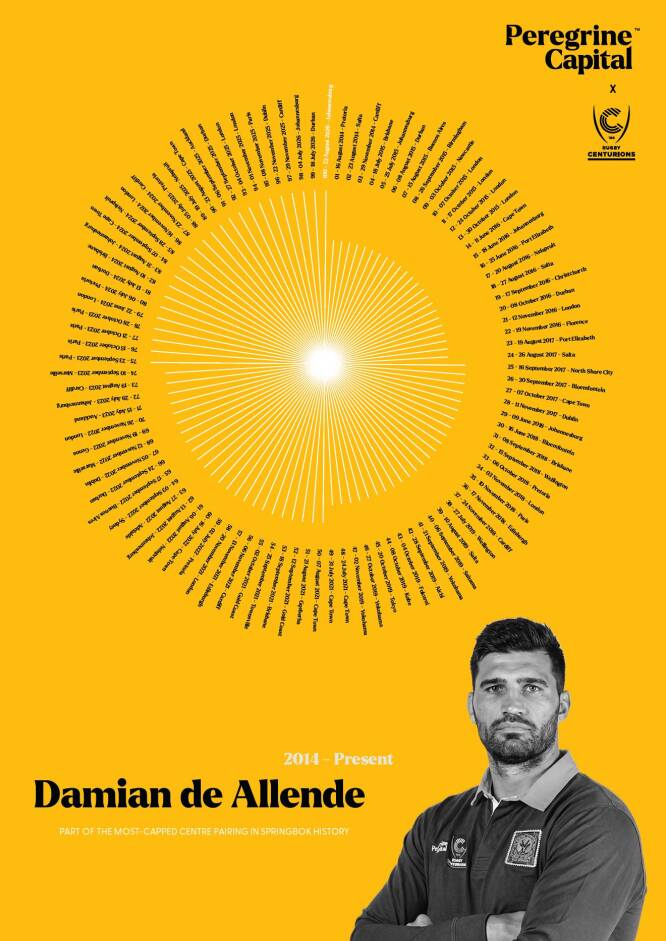
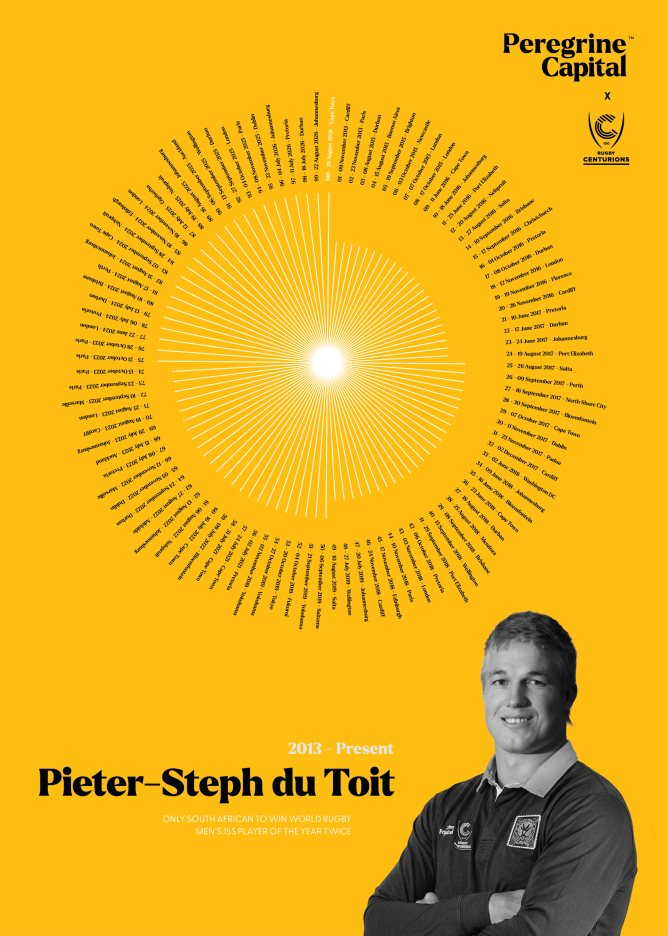
In August, Damian de Allende became the 10th Springbok to reach 100 Test caps, and Pieter-Steph du Toit became the 11th just days later. Both have joined the Peregrine Capital x Centurions partnership. Only eleven players in the history of South African rugby have become Centurions – a useful reminder of how rare the number really is.
In August, we brought six Springbok Centurions and two All Black Centurions together at Zeitz MOCAA in Cape Town, hosted by former Scotland international and British & Irish Lion Jim Hamilton. The event was filmed to create a show on SuperSport airing in November. The evening began with a talk with New Zealand Centurions Dan Carter and Richie McCaw. Then six South African Centurions, in one room, in front of a live audience, put to the test by the only people who can rattle them: each other. Part game show, part talk show. A test of who remembers their journeys from 1 to 100. Great banter, great stories. All for charity. Don’t miss watching it on SuperSport this November.
A year into our partnership with the Rugby Centurions, the idea has outgrown the campaign that started it. What began as two TV adverts has become an ongoing conversation about what it takes to compound success over decades – on the field and in the market. Same discipline, same patience, same refusal to chase the short win.
100X Centurions:
Still Playing The Long Game

Discover the market dynamics impacting our funds' performance during the third quarter of 2026, as discussed by Justin Cousins, portfolio manager at Peregrine Capital.
The Peregrine Capital High Growth Fund delivered a net return of 0.8% for the third quarter of 2026. This compares with the SA Multi Asset High Equity Index, which delivered 0.3%. The Peregrine Capital Pure Hedge Fund delivered a net return of 1.8% for the third quarter of 2026. This compares with the SA Multi Asset Low Equity Index, which returned 0.3% over the same period.
Earlier this year, we described the outlook as effectively binary. A near-term resolution of the conflict with Iran would likely see oil prices retrace and risk assets recover. A prolonged conflict would keep oil prices elevated, with knock-on effects for inflation, interest rates and equity markets. The second quarter followed the first path: a ceasefire between the US and Iran was agreed in June, the oil price fell back to around $73 per barrel and markets rallied to record highs.
During the quarter, we increased net offshore equity exposure, focused on large technology platform companies, and reduced domestic equity exposure. Index future hedges on part of the funds' equity exposure remain in place, keeping net exposure moderate in the High Growth Fund and low in the Pure Hedge Fund.
The June ceasefire has failed, and a lasting settlement is not in sight. While shipping through the Strait of Hormuz remains disrupted, we expect oil prices and inflation to stay elevated. This limits the scope for interest rate cuts and is a headwind for South African consumers and for highly valued shares.
We remain positive on the long-term opportunity in artificial intelligence. Within technology, we see the best value in the large platform companies, which continue to grow earnings strongly and trade at reasonable valuations relative to that growth.
Over our 28-year track record, we have navigated many periods like this one. Heightened uncertainty often creates the most compelling investment opportunities as valuations become more attractive. We remain disciplined in managing risk while staying positioned to capture those opportunities, and we believe our funds are well positioned to deliver strong risk-adjusted returns for investors in the coming quarters.
Equity market gains were narrow. Large technology and artificial intelligence companies continued to lead, and the S&P 500 returned 2.3% in US dollars, while the MSCI All Country World Index returned 1.7%. Most other markets fell, with smaller US companies, Japanese and Chinese shares all ending the quarter lower.
In South Africa, higher oil prices led the South African Reserve Bank to raise interest rates by 0.25% in September. Precious metals miners surged in August as gold and platinum prices rallied, but gave back much of that gain in September, leaving the JSE Capped All Share Index with a return of -0.3% for the quarter. The rand ended the quarter broadly unchanged at around R16.40 to the US dollar.
Within our funds, large technology platform holdings and precious metals miners were the largest contributors to performance. As the conflict re-escalated, we added oil positions as insurance against a prolonged disruption to supply. These positions contributed as the oil price rose, and we have since sold them. South African food producers and retailers detracted, as did European luxury goods holdings. Within semiconductors, gains in artificial intelligence chip holdings were offset by losses in memory and data storage holdings.
The third quarter moved onto the second path. The ceasefire broke down in early July, and renewed US strikes and attacks on shipping again restricted traffic through the Strait of Hormuz. The oil price rose by roughly 40% over the quarter to above $100 per barrel. Higher energy prices pushed inflation concerns back up, and the US Federal Reserve raised interest rates in September, its first increase in three years. The US 10-year government bond yield rose to around 5.3%, its highest level in nearly two decades.
We expect oil prices and inflation to stay elevated while shipping through the Strait of Hormuz is disrupted.
Click above to view the strategy now available to retail investors: a US dollar-denominated global hedge fund built to maximise capital growth in dollars over the long term, investing across a flexible range of global assets including shares, bonds and property. The same process that built the track record at home, applied offshore.
Click above to view the longest-running hedge fund in South Africa, designed to offer investment stability and downside protection while growing investors’ purchasing power. It aims to deliver inflation-beating returns over the medium term and has achieved 100X growth without a single negative year since inception in July 1998.**
**Please refer to disclaimers at the end of the newsletter.

Click above to view the strategy now available to retail investors: a US dollar fund that follows the same multi-asset investment strategy as our High Growth Fund, but with its own investment guidelines and limits, so performance may differ. It aims to grow wealth in hard currency over the long term.
Click above to view why you should continue to invest in Peregrine Capital’s High Growth Fund – the first hedge fund in South Africa to achieve 100X an investor’s initial investment. R1 million invested in February 2000 is worth more than R209 million today.*
*Please refer to disclaimers at the end of the newsletter.
Want To Learn More
About Our Flagship Funds?
Upcoming Event Where You Can Meet the Peregrine Capital Team
Join us at our annual Investor Day in Bryanston on 25 February 2027. Contact us if you would like to attend – events@peregrine.co.za
Peregrine Investor Day Johannesburg

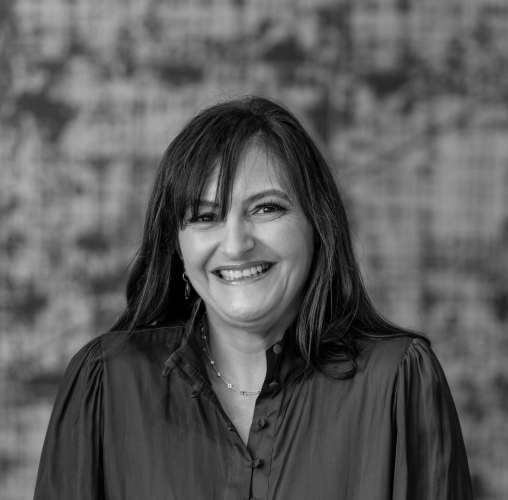
Leading Beyond The Numbers
Tania Formilan, Chief Operating Officer and Chief Financial Officer at Peregrine Capital, writes on what leadership in an investment business looks like beyond performance – the culture, the people and the decisions that do not show up in a return figure.


Hide In A Hedge In Tricky Times
The Financial Mail’s Investors Monthly examines hedge funds as a tool for managing inflation and diversifying a portfolio, using a Peregrine Capital chart on how market-neutral funds behave. A useful reminder that hedge funds can form part of a Regulation 28 retirement portfolio, within the 10% category limit.
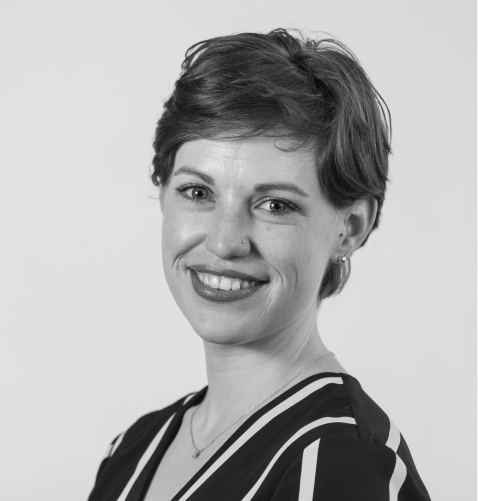

The Many Hats a Financial Adviser Wears
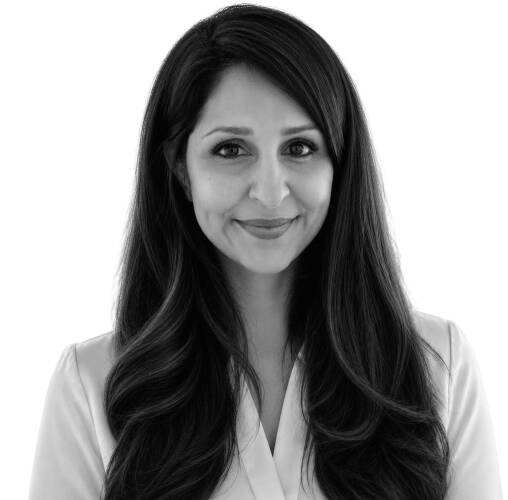
The Legacy Of 100
Writing in Moneyweb, Kavita Patel, Peregrine Capital Investment Specialist, looks at what the number 100 actually represents – in rugby caps and in returns – and why longevity, not any single year, is the real measure of an investment business.
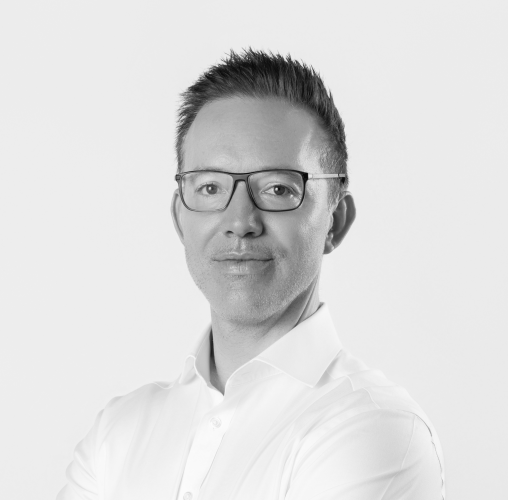
Investing In A World Gone Tech Crazy
On MoneywebNOW, the conversation between Simon Brown and Jacques Conradie turns to how a valuation-disciplined manager approaches a market being reshaped by artificial intelligence – and where the opportunities and the risks actually sit.
Peregrine Capital
in The News
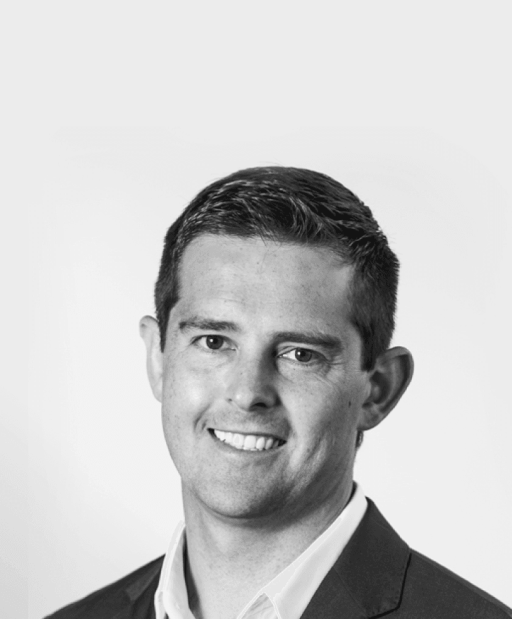
Webinar
In our latest Peregrine Insider Webinar, which we held in September, Justin Cousins, Portfolio Manager, and Alan Yates, Head of Distribution, work through where this year's positions stand, including why we cut South African exposure in March and the signals that would bring us back, and the hyperscaler capex debate after Q2: free cash flow at zero against payback periods of under three years, and where the return question is settled and where it is not.
Peregrine Insider
Johannesburg, August

Portfolio Managers Jacques Conradie, David Fraser and Justin Cousins joined Alan Yates, Head of Distribution, in front of just under 150 financial advisers in Sandton, sharing market sentiment on local and global companies and how it feeds into our fund strategies.
An Evening with The Centurions Cape Town, August
What does it take to go from your first Test cap to your hundredth? We hosted two All Black Centurions: Dan Carter and Richie McCaw at Zeitz MOCAA. Between them, they’ve earned 260 Test caps. Jim Hamilton sat down with them to find out what it takes to reach 100.
The evening was held in aid of the charities supported by the Rugby Centurions.


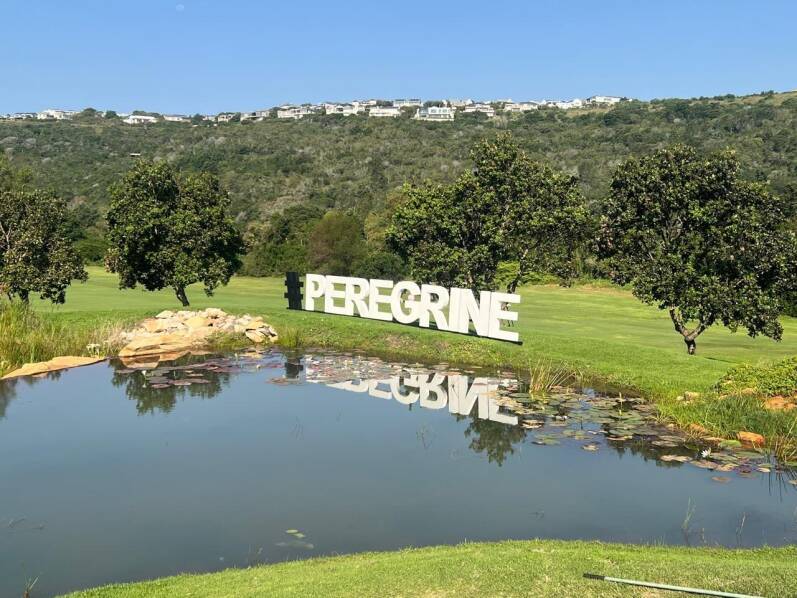
Legends Pro-Am
Plettenberg Bay, September
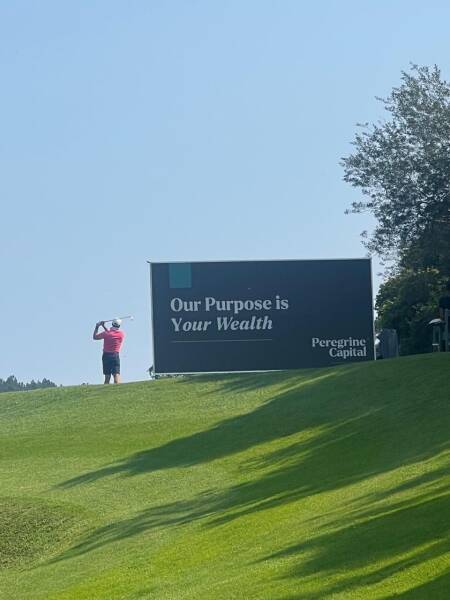
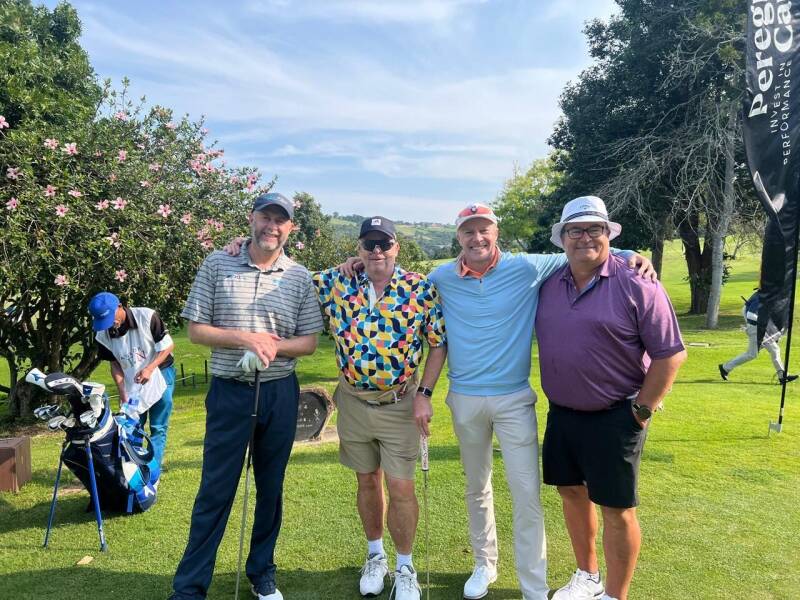
We co-sponsored the SA Senior Open and Sunshine Legends Tour in Plettenberg Bay – another setting where careers are measured in decades rather than seasons. And enjoyed an evening with brokers at Walkers Beach Hotel.
Industry Events We Participated
in That You May Have Missed
Contact Us
About Investing, Today.
Disclaimers:
Fund Name | Inception date | Highest annual return | Lowest annual return | Latest 1 year | Latest 5 years | Latest 15 years |
|---|---|---|---|---|---|---|
High Growth Fund | Feb-00 | 71.61% | -16.20% | 6.13% | 13.75% | 16.76% |
ASISA South Africa MA High Equity | Feb-00 | 39.47% | -14.75% | 6.28% | 10.47% | 9.44% |
Pure Hedge Fund | Jul-1998 | 133.81% | 0.59% | 5.45% | 11.33% | 12.22% |
ASISA South Africa MA Low Equity | Jul-1998 | 40.59% | -3.10% | 7.24% | 9.51% | 8.44% |



Contact Us
About Investing, Today.
Upcoming Event Where You Can Meet the Peregrine Capital Team
Join us at our annual Investor Day in Bryanston on 25 February 2027. Contact us if you would like to attend – events@peregrine.co.za
Peregrine Investor Day Johannesburg
An Evening with
The Centurions
Cape Town, August
What does it take to go from your first Test cap to your hundredth? We hosted two All Black Centurions: Dan Carter and Richie McCaw at Zeitz MOCAA. Between them, they’ve earned 260 Test caps. Jim Hamilton sat down with them to find out what it takes to reach 100.
The evening was held in aid of the charities supported by the Rugby Centurions.

Webinar
In our latest Peregrine Insider Webinar, which we held in September, Justin Cousins, Portfolio Manager, and Alan Yates, Head of Distribution, work through where this year's positions stand, including why we cut South African exposure in March and the signals that would bring us back, and the hyperscaler capex debate after Q2: free cash flow at zero against payback periods of under three years, and where the return question is settled and where it is not.
Peregrine Insider
Johannesburg, August

Portfolio Managers Jacques Conradie, David Fraser and Justin Cousins joined Alan Yates, Head of Distribution, in front of just under 150 financial advisers in Sandton, sharing market sentiment on local and global companies and how it feeds into our fund strategies.


Legends Pro-Am
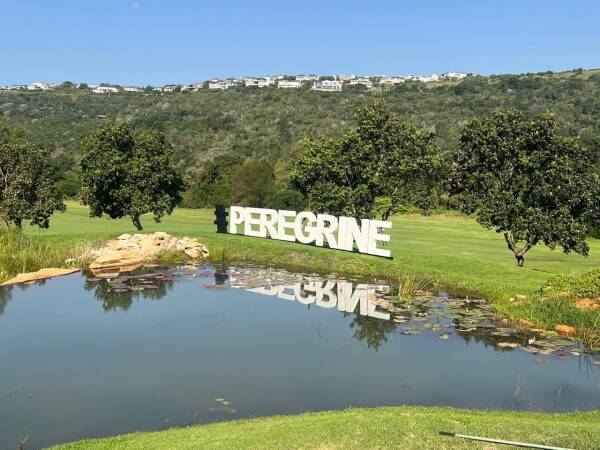
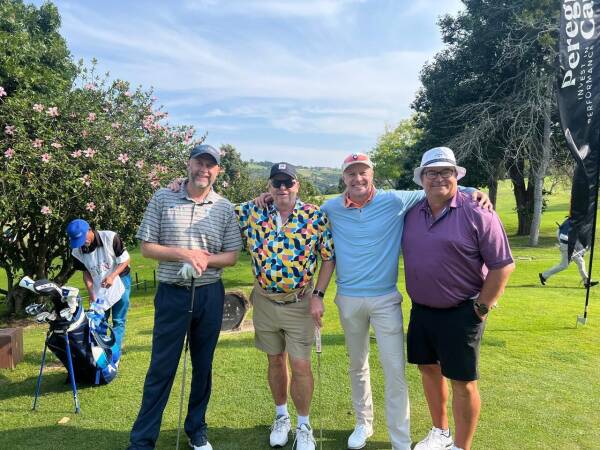
Plettenberg Bay, September
We co-sponsored the SA Senior Open and Sunshine Legends Tour in Plettenberg Bay – another setting where careers are measured in decades rather than seasons. And enjoyed an evening with brokers at Walkers Beach Hotel.
Industry Events We Participated in That You May Have Missed
Meet Our Newest Team Member
We are delighted to welcome Brian “Boris” Kourie to the Investment Specialist team. Boris joined in June and is based in Plettenberg Bay, looking after the Garden Route. We are excited to see the impact his skills and experience will bring.
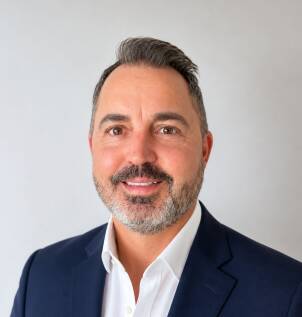
Boris Kourie
INVESTMENT
SPECIALIST
Meet Our Finalists








Click through to see all regional finalists.
Can you make 24? For hundreds of primary school learners across South Africa, it has become a test of speed, strategy and mental agility. What started as a 54-school pilot in Gauteng in 2025 has grown into a national competition involving more than 300 schools. On 29 October, 38 Grade 4 to 6 finalists compete for the title – the winner takes R25,000 in a Peregrine Capital investment account, plus R25,000 for their school.
Jacques Conradie, as it happens, was a Maths24 national champion himself at school.
Energised by
Peregrine Capital:
Can You Make 24?
24SumMore
One to One Hundred, on SuperSport in November
Two New Centurions
In August, Damian de Allende became the 10th Springbok to reach 100 Test caps, and Pieter-Steph du Toit became the 11th just days later. Both have joined the Peregrine Capital x Centurions partnership. Only eleven players in the history of South African rugby have become Centurions – a useful reminder of how rare the number really is.
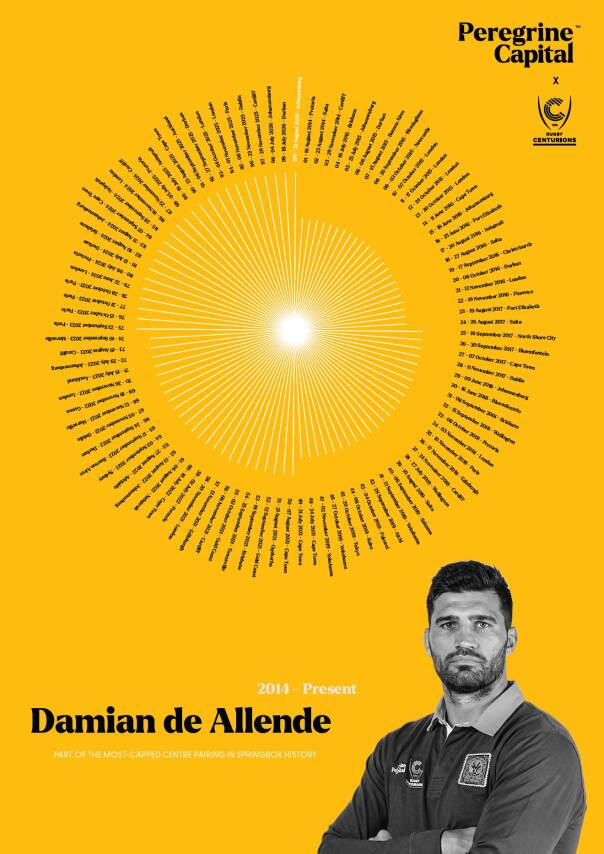
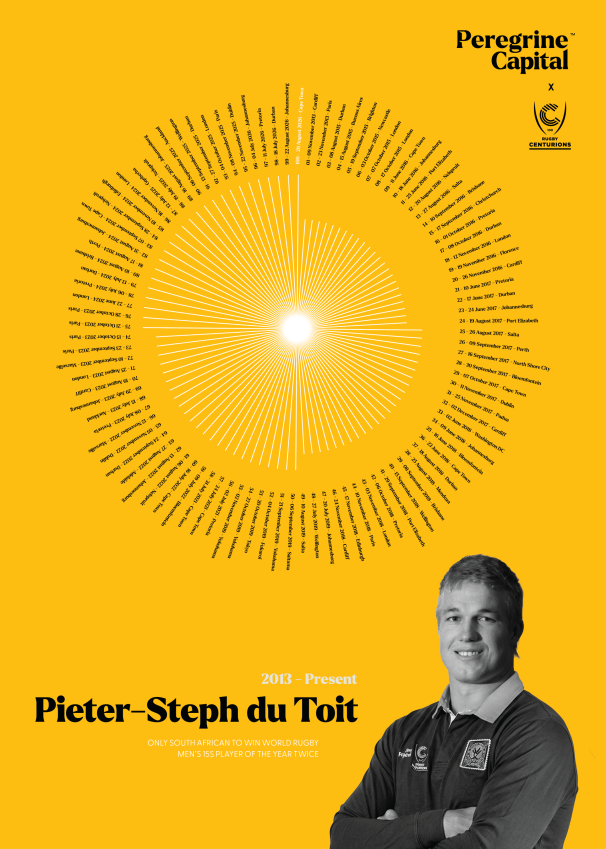
In August, we brought six Springbok Centurions and two All Black Centurions together at Zeitz MOCAA in Cape Town, hosted by former Scotland international and British & Irish Lion Jim Hamilton. The event was filmed to create a show on SuperSport airing in November. The evening began with a talk with New Zealand Centurions Dan Carter and Richie McCaw. Then six South African Centurions, in one room, in front of a live audience, put to the test by the only people who can rattle them: each other. Part game show, part talk show. A test of who remembers their journeys from 1 to 100. Great banter, great stories. All for charity. Don’t miss watching it on SuperSport this November.
A year into our partnership with the Rugby Centurions, the idea has outgrown the campaign that started it. What began as two TV adverts has become an ongoing conversation about what it takes to compound success over decades – on the field and in the market. Same discipline, same patience, same refusal to chase the short win.
100X Centurions:
Still Playing The Long Game

Leading Beyond The Numbers
Tania Formilan, Chief Operating Officer and Chief Financial Officer at Peregrine Capital, writes on what leadership in an investment business looks like beyond performance – the culture, the people and the decisions that do not show up in a return figure.


Hide In A Hedge In Tricky Times
The Financial Mail’s Investors Monthly examines hedge funds as a tool for managing inflation and diversifying a portfolio, using a Peregrine Capital chart on how market-neutral funds behave. A useful reminder that hedge funds can form part of a Regulation 28 retirement portfolio, within the 10% category limit.

The Many Hats a Financial Adviser Wears

The Legacy Of 100
Writing in Moneyweb, Kavita Patel, Peregrine Capital Investment Specialist, looks at what the number 100 actually represents – in rugby caps and in returns – and why longevity, not any single year, is the real measure of an investment business.
Investing In A World Gone Tech Crazy
On MoneywebNOW, the conversation between Simon Brown and Jacques Conradie turns to how a valuation-disciplined manager approaches a market being reshaped by artificial intelligence – and where the opportunities and the risks actually sit.
Peregrine Capital
in The News
Episode 3
Gerrie Fourie, Capitec
“We’re retailers, we think client and then risk. Bankers look at risk, risk, risk, and then client.” Twenty-five years building Capitec into South Africa’s largest bank by market capitalisation, the one capital rule he would not move, and what the market misread for twelve years.
Episode 2
Steven Brown, Fortress
Steven Brown, CEO of Fortress Real Estate, explains how a flawed dual-share structure, capped A shares and geared B shares with equal voting rights, nearly broke the company, the R7 billion NEPI Rockcastle deal that finally fixed it, and the growth strategy that has followed across logistics, retail and Central Europe to help build a R54 billion property portfolio.
Episode 1
Marthinus Visser, OUTsurance
Twenty-eight years inside one of the JSE’s most closely watched compounders, from a single Centurion office in 1998 to a multinational insurer worth more than R100 billion. Where the OUTbonus came from, why Australia and not Brazil, and why they walked away from the ventures that did not work.
Building Conviction:
Our Podcast On The Leaders Behind Exceptional Businesses
In August we launched Building Conviction, a podcast series about what it takes to build something exceptional – the businesses, the leaders and the decisions behind them. Jacques sits down with the people who actually built the companies we follow closely, and every guest closes with a Conviction Card: one high-conviction view for the decade ahead. Three episodes are out.
Click above to view the strategy now available to retail investors: a US dollar-denominated global hedge fund built to maximise capital growth in dollars over the long term, investing across a flexible range of global assets including shares, bonds and property. The same process that built the track record at home, applied offshore.
Click above to view the longest-running hedge fund in South Africa, designed to offer investment stability and downside protection while growing investors’ purchasing power. It aims to deliver inflation-beating returns over the medium term and has achieved 100X growth without a single negative year since inception in July 1998.**
**Please refer to disclaimers at the end of the newsletter.

Click above to view the strategy now available to retail investors: a US dollar fund that follows the same multi-asset investment strategy as our High Growth Fund, but with its own investment guidelines and limits, so performance may differ. It aims to grow wealth in hard currency over the long term.
Click above to view why you should continue to invest in Peregrine Capital’s High Growth Fund – the first hedge fund in South Africa to achieve 100X an investor’s initial investment. R1 million invested in February 2000 is worth more than R209 million today.*
*Please refer to disclaimers at the end of the newsletter.
Want To Learn More
About Our Flagship Funds?

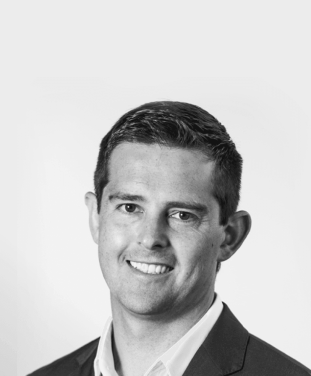
Discover the market dynamics impacting our funds' performance during the third quarter of 2026, as discussed by Justin Cousins, portfolio manager at Peregrine Capital.
The Peregrine Capital High Growth Fund delivered a net return of 0.8% for the third quarter of 2026. This compares with the SA Multi Asset High Equity Index, which delivered 0.3%. The Peregrine Capital Pure Hedge Fund delivered a net return of 1.8% for the third quarter of 2026. This compares with the SA Multi Asset Low Equity Index, which returned 0.3% over the same period.
Earlier this year, we described the outlook as effectively binary. A near-term resolution of the conflict with Iran would likely see oil prices retrace and risk assets recover. A prolonged conflict would keep oil prices elevated, with knock-on effects for inflation, interest rates and equity markets. The second quarter followed the first path: a ceasefire between the US and Iran was agreed in June, the oil price fell back to around $73 per barrel and markets rallied to record highs.
During the quarter, we increased net offshore equity exposure, focused on large technology platform companies, and reduced domestic equity exposure. Index future hedges on part of the funds' equity exposure remain in place, keeping net exposure moderate in the High Growth Fund and low in the Pure Hedge Fund.
The June ceasefire has failed, and a lasting settlement is not in sight. While shipping through the Strait of Hormuz remains disrupted, we expect oil prices and inflation to stay elevated. This limits the scope for interest rate cuts and is a headwind for South African consumers and for highly valued shares.
We remain positive on the long-term opportunity in artificial intelligence. Within technology, we see the best value in the large platform companies, which continue to grow earnings strongly and trade at reasonable valuations relative to that growth.
Over our 28-year track record, we have navigated many periods like this one. Heightened uncertainty often creates the most compelling investment opportunities as valuations become more attractive. We remain disciplined in managing risk while staying positioned to capture those opportunities, and we believe our funds are well positioned to deliver strong risk-adjusted returns for investors in the coming quarters.
Equity market gains were narrow. Large technology and artificial intelligence companies continued to lead, and the S&P 500 returned 2.3% in US dollars, while the MSCI All Country World Index returned 1.7%. Most other markets fell, with smaller US companies, Japanese and Chinese shares all ending the quarter lower.
In South Africa, higher oil prices led the South African Reserve Bank to raise interest rates by 0.25% in September. Precious metals miners surged in August as gold and platinum prices rallied, but gave back much of that gain in September, leaving the JSE Capped All Share Index with a return of -0.3% for the quarter. The rand ended the quarter broadly unchanged at around R16.40 to the US dollar.
Within our funds, large technology platform holdings and precious metals miners were the largest contributors to performance. As the conflict re-escalated, we added oil positions as insurance against a prolonged disruption to supply. These positions contributed as the oil price rose, and we have since sold them. South African food producers and retailers detracted, as did European luxury goods holdings. Within semiconductors, gains in artificial intelligence chip holdings were offset by losses in memory and data storage holdings.
The third quarter moved onto the second path. The ceasefire broke down in early July, and renewed US strikes and attacks on shipping again restricted traffic through the Strait of Hormuz. The oil price rose by roughly 40% over the quarter to above $100 per barrel. Higher energy prices pushed inflation concerns back up, and the US Federal Reserve raised interest rates in September, its first increase in three years. The US 10-year government bond yield rose to around 5.3%, its highest level in nearly two decades.
We expect oil prices and inflation to stay elevated while shipping through the Strait of Hormuz is disrupted.
CEO, Jacques Conradie
Welcome to the latest edition of Peregrine Capital’s newsletter, where we share our views and news about our business, our funds, and why hedge funds should form part of a growing and diversified investment portfolio. This edition covers our perspective on the third quarter of 2026, following the semi-annual investor letter we published in July.
The third quarter was a reminder of how quickly the investment backdrop can change. The ceasefire in the Middle East broke down, the oil price rose above $100 a barrel, and both the US Federal Reserve and the South African Reserve Bank raised interest rates. It is in markets like these that an active, valuation-disciplined approach earns its place in a portfolio. In his review below, Portfolio Manager Justin Cousins explains how we positioned our funds through the quarter and where we see opportunity from here.
This quarter also marked an important step for our offshore offering. The Peregrine Capital Vision Fund and the Peregrine Capital High Growth USD Fund are now available to retail investors, approved under section 65 of the Collective Investment Schemes Control Act and accessible on the vast majority of platforms our advisers use. Your clients can now hold US dollar exposure to the same investment process behind our 28-year track record. For more information, please speak to your Peregrine Capital Investment Specialist.
We share regular updates and insights on our LinkedIn page, so please follow us to stay updated with what we’re working on as we continue to deliver on our purpose of creating wealth for our clients.
Fund Name | Inception date | Highest annual return | Lowest annual return | Latest 1 year | Latest 5 years | Latest 15 years |
|---|---|---|---|---|---|---|
High Growth Fund | Feb-00 | 71.61% | -16.20% | 6.13% | 13.75% | 16.76% |
ASISA South Africa MA High Equity | Feb-00 | 39.47% | -14.75% | 6.28% | 10.47% | 9.44% |
Pure Hedge Fund | Jul-1998 | 133.81% | 0.59% | 5.45% | 11.33% | 12.22% |
ASISA South Africa MA Low Equity | Jul-1998 | 40.59% | -3.10% | 7.24% | 9.51% | 8.44% |
Disclaimers: